
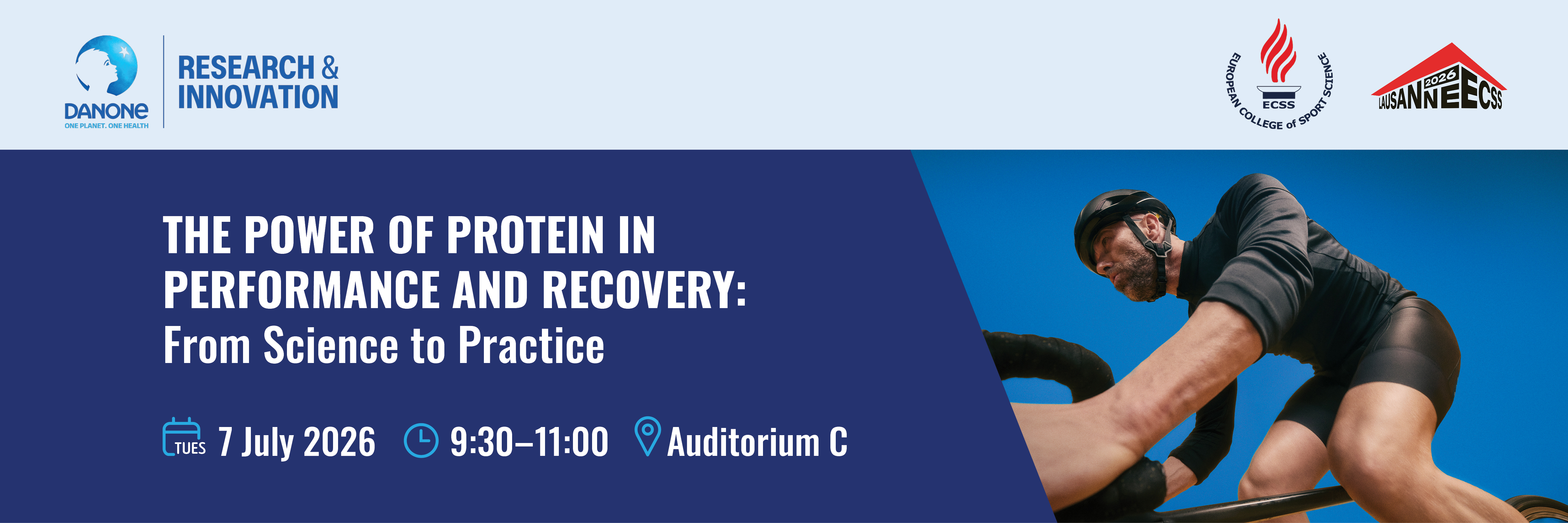
The Power of Protein in Performance and Recovery: From Science to Practice
Discover how to turn cutting-edge protein science into practical food-based strategies that fuel athletic performance and recovery.
Dietary protein plays a central role in supporting muscle protein synthesis and regulating muscular adaptability to exercise. It’s not just protein quantity that matters. Variables such as protein quality, source, distribution of intake, digestion kinetics and food structures such as the dairy food matrix influence how effectively protein is used to support muscle repair, maintenance and growth.
This symposium brings together a faculty of world-renowned experts to explore how mechanistic insights can inform practical, food-based protein strategies across different exercise and energy contexts. In this session, Professor Luc van Loon, Professor Stuart Phillips and Professor Nancy Rodriguez will highlight how the latest research findings can inform innovative, evidence-based protein plans in applied sport and clinical settings.
Participants will:
- Explore how protein science can be applied to real-world approaches that support performance and recovery.
- Find out how protein digestion, absorption and the food matrix influence muscle protein synthesis and adaptability to exercise.
- Examine the protein variables that matter most for performance, recovery, and longer-term gains in muscle mass.
- Evaluate food-based strategies to optimise protein intake and utilisation for athletes during energy restriction.
|
|
Muscle conditioning after exercise: from protein powders to foods Prof Luc van Loon |
 |
Impact of protein intake on muscle performance and recovery: what are the relevant protein variables? Prof Stuart Phillips |
 |
Recommendations for athletes in energy restriction: strategies to optimise protein intake and utilisation Prof Nancy Rodriguez |

This scientific symposium is organised and funded by Danone Research & Innovation. The programme has been developed in collaboration with invited experts and reflects their independent scientific perspectives.