

Masterclass in Field-Ready and Point-of-Care Assessment:
Integrating Human Performance Across Physiological and Pathophysiological Conditions
This session explores how field-ready and point-of-care assessments can improve the precision, validation and professional usability of performance evaluation under real-world conditions. Rather than treating laboratory testing as the sole standard, the symposium focuses on how emerging physiological and pathophysiological data can be integrated into established diagnostic frameworks in a scientifically robust yet practically applicable way. Special attention will be given to translating scientific results for professional users, linking nutritional state, metabolic preparation, workload transitions and recovery to high-performance function through an integrated perspective that includes oxygen transport, metabolite and by-product dynamics and blood and muscle responses. Across the full continuum from warm-up to fatigue, rehabilitation, return-to-play and both metabolic and structural recovery, the session aims to demonstrate how validated field-based measurements can provide a more relevant and actionable understanding of human performance in practice.
Date: Tuesday, 7 July
Time: 09:00 - 11:00
Session room: 3BC
Booth: Kurucsai, ID 22, Campus Level - live demonstrations throughout the Congress days
CHAIRS
|
Dr Gabor Kurucsai |
From Mitochondrial Resilience to Injury Prevention, Safety Performance and Field-Ready Diagnostics Performance in the field cannot be understood through a single parameter alone. While classical threshold models are typically based on incremental laboratory testing, real team-sport environments involve repeated disruptor efforts followed by changing recovery demands, where lactate may remain elevated despite substantial metabolic recovery. In our field-realistic, reversed workload model, lactate showed similar threshold-like values under physiologically distinct conditions, whereas acid–base balance, blood gas (pO₂/pCO₂) dynamics and substrate utilisation changed significantly. These findings suggest that active and passive recovery reflect different metabolic states and that integrated oxygen logistics, acid–base regulation and fuel utilisation provide a more meaningful framework for interpreting fatigue, recovery and adaptation than any single parameter alone. |
|
Dr Jeroen Molinger |
The Brain-Lung-Muscle Axis in Tier 1 Operations: Integrating Cardiorespiratory Fitness, Ventilatory Efficiency and Multi-Site NIRS to Predict Cognitive Resilience During Close-Quarter-Battle (CQB) Background: Tier 1 operators must maintain elite executive function while navigating the extreme physical and metabolic demands of Close Quarters Battle (CQB). While high cardiorespiratory fitness (CRF) is a baseline requirement, the physiological mediators that preserve decision-making and shooting precision under acute, all-out exertion remain |


SPEAKERS
|
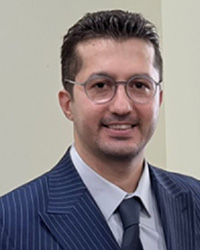
Ass Prof Seyed Houtan Shahidi
|
Beyond the Lab: Field-Based Testing as a Practical Standard for Warm-Up, Recovery and Endurance Performance Endurance running performance depends on the interaction between central oxygen delivery and peripheral muscle oxygen utilisation. Although V̇O₂max defines aerobic capacity, the ability to rapidly mobilise and distribute oxygen during changes in exercise intensity is often more important in competitive settings, where runners must respond to pace surges and fluctuating metabolic demands. Recent research, including our ongoing work, suggests that priming strategies and respiratory preparation may improve oxygen uptake kinetics, ventilatory efficiency and muscle oxygen extraction, thereby reducing oxygen deficit at the onset of intense exercise. By combining laboratory-based cardiopulmonary testing with field-based running assessments and wearable muscle oxygenation monitoring, we aim to translate physiological diagnostics into practical warm-up strategies that support endurance performance under real racing conditions. |
|
Stijn Lintermans
|
Validated Sensor-Based Monitoring in Performance Science This presentation outlines a practical approach to translating performance data into meaningful decision-making support, with a particular focus on validated non-invasive monitoring methods in youth and adolescent athlete development. It shows how monitoring tools can create value in sports science and performance practice when their outputs are interpreted correctly and applied in context. A key message of the presentation is that technological innovation alone is not sufficient; the practical value of data depends on proper validation and meaningful interpretation. Overall, the session offers a concise and applied perspective on how performance science can generate more relevant and actionable insights in daily practice. |
|
Roger Schmitz
|
Overview of Muscle Oxygen Monitoring Applications The presentation begins with a concise overview of how Near Infrared Spectroscopy (NIRS) works and what it measures in muscle. It then provides practical examples of how muscle oxygenation data can be used in athlete monitoring and performance support, with particular attention to breakpoint analysis and intensity control. Additional applications include warm-up optimisation, identification of physiological limiters and rehabilitation and return-to-play decision-making after injury. |
|
Riitta Simonen
|
Wearable Muscle EMG | Myontec: Rapid Field Screening for Performance Myontec supports field-ready screening during dynamic training in team sports, ball sports, tennis and other high-intensity movement settings by identifying which muscle groups fatigue first and where left-right asymmetries emerge. It provides an objective snapshot of activation patterns, muscle relaxation level and load distribution under real-life conditions, helping practitioners quickly identify the most likely weak link. This enables more targeted follow-up assessment and more confident decisions in training adjustment and return-to-play. |





|
Prof Fabio Cavargini
|
EMG in Football-Specific Dynamic Activities By adapting his assessment approach to practical, field-ready measurements, Fabio Cavargini has built more than twenty years of experience as a strength and conditioning coach working with soccer players, with a particular focus on strength assessment and training. In recent years, he has integrated Myontec wearable technology into his practice to assess internal muscle load during dynamic and static activities, as well as during post-injury rehabilitation and return-to-play progression. |
|
Anna Hortobagyi |
The 150-Minute Guideline Is Not Enough: Laboratory Evidence for Intensity Misclassification, Delayed Lactate Handling, and Recovery-Dependent Metabolic Coupling in Obesity Many adults with obesity remain metabolically non-responsive despite achieving ≥150 min/week, suggesting that time-based targets miss real-life intensity distribution. |