TUESDAY, August 30
11:00 - 13:00*, Lecture room: MADRID 1
- 11: 00 – 11:05 Welcome
- 11: 05 – 11:15 Introduction: Canoe slalom overview and history
Stanislava Smiešková, Slovak Canoeing, Slovakia - 11: 15 – 11:30 Course design for canoe slalom competitions
Scott Shipley, S2O Design, USA - 11:30 – 11:45 Slalom course design and attributes for success in canoe slalom
Matej Vajda, Comenius University, Slovakia - 11:45 – 12:00 Body morphology for elite slalom paddlers
Jan Busta, Charles University, Czech Republic - 12:00 – 12:15 Aerobic and anaerobic evaluation on canoe slalom: implications for practice and performance.
Leonardo Messias, São Francisco University, Brazil - 12:15 - 12:30 Biomechanics and physiological load during flat-water slalom kayaking
Paul Macdermid, Massey University, New Zealand - 12:30 – 12:45 Paddle stroke performance in canoe kayak
Beatriz Gomes, University of Coimbra, Portugal - 12:45 – 13:00 Influence of paddle stroke technique in canoe slalom competition
James Wakeling, Simon Fraser University, Canada
Central European Time
Date: 30.08.2022, Time: 11:00 – 14:00, FIBES / Lausanne
Description
The aim of this ECSS pre-congress workshop is to update scientific knowledge upon different perspectives of players development, testing and coaching in elite soccer. A special focus is laid on physiological, biomechanical and training soccer science aspects. International recognized soccer researchers and physical preparators form a top-class programme. The facilities of the ECSS-congress center FIBES will offer a perfect framework. The topics discussed will be the new challenges of training, training load, game analysis and soccer injuries.
Speaker A

Aaron Coutts, PhD ASp
Distinguished Professor
Head, School of Sport, Exercise & Rehabilitation
Faculty of Health
University of Technology Sydney (UTS)
Australia
Distinguished Professor at University of Technology Sydney (UTS), Faculty of Health (Australia). Head of the School of Sport, Exercise & Rehabilitation. Author of hundreds scientific papers and textbooks related to soccer science. Aaron Coutts is a distinguished professor in sport and exercise science. Aaron teaches in the areas of applied exercise physiology, exercise prescription and research design and statistics. His research is focused around developing evidence-based methods for improving performance and health of athletes. Aaron also provides sport science advice to several top-level professional football clubs and sporting organizations. He is a Director of Exercise and Sport Science Australia (ESSA) and a member of the Nike Sport Research Laboratory Advisory Board. Aaron has published more than 200 scientific articles and has been an invited speaker to many sport science conferences. He is an Associate Editor for the International Journal of Sports Physiology and Performance and an editorial board member for the Journal of Science and Medicine in Sport. He is also an accredited sport scientist with the ESSA.
“Monitoring the external and internal training load in Soccer players”
Speaker B

Franco Impellizzeri, PhD.
Full Professor
School of Sport, Exercise & Rehabilitation
Faculty of Health
University of Technology Sydney (UTS)
Australia
Professor Franco M. Impellizzeri began his career (1997) as a researcher in the private sector working as a coach, before becoming head of research at the MAPEI Sport Research Centre (Italy). This research center was created by a private company (MAPEI SpA) to take care of the athletes sponsored, including their owned Professional Cycling Team, for 9 years at the top of the International Cycling Union ranking. More recently, Franco has been the fitness coach of the Swiss Fencing Team (2012 to 2016) for the preparation of the Olympic Games in Rio de Janeiro. Pursuing his interest in exploring another scientific environment, he moved in clinical setting for 10 years (from 2007 to 2018) as Senior Research Fellow at the Schulthess Clinic in Zurich, Switzerland, where he was the Head of the Lower Limb Clinical Outcome group. In Zurich, Professor Impellizzeri conducted projects on injury prevention programs with studies supported by the Football Medical and Research Centre (F-MARC) of the International Federation of Association Football (FIFA). In 2018, Professor Impellizzeri move back full time in sport, as Professor in Sport and Exercise Science and Medicine at the UTS FAculty of Health. He has publications (>170) in the area of sport science and orthopedics. He is member of the editorial boards of various scientific journals including co-editor in chief of Science and Medicine in Football. He is fellow of the European College of Sport Sciences and member of the STORK (The Society for Transparency, Openness, and Replication in Kinesiology). Professor Impellizzeri plans to develop more research in the area of injury epidemiology, while continuing working on training, testing and monitoring of athletes.
“Training load: concepts, terminology and measures”
Speaker C

Fabio Serpiello, Ph.D.
Associate Professor in Sport Physiology
Postgraduate Convenor
Course Chair, Master of Sport and Exercise Science
College of Sport and Exercise Science/Institute for Health and Sport
Victoria University
Australia
Fabio is an Associate Professor in Sports Physiology and Chair of the Master of Sport and Exercise Science. He is also Head of Academy Performance and Sport Science at Melbourne Victory FC. He has a bachelor and master degree in Sport and Exercise Science from the University of Milan, Italy, and has also studied at the Universidad Politecnica de Madrid (Spain), and the University of Verona (Italy). He joined Victoria University in 2008 as a PhD student, funded by the prestigious Endeavour Europe Award. In 2011 Fabio was a recipient of a Joao Havelange Research Scholarship, awarded by the Federation Internationale de Football Association (FIFA) and the International Centre for Sport Studies (CIES). Fabio has obtained over $100,000 in external research funding as chief investigator, including grants from FIFA, UEFA, and individual clubs, and contributed as associate investigator to IHES receiving $850,000 funding, primarily from FIFA and Football Federation Victoria.
“Acceleration in youth Football. Can we move past the current parrochialism?”
Speaker D
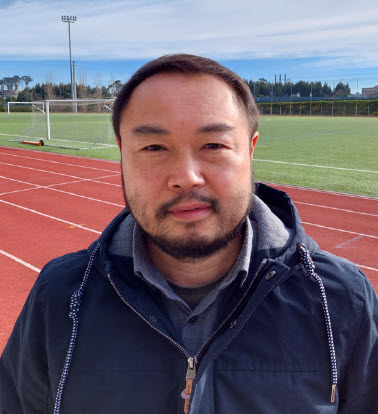
Fábio Nakamura, PhD.
Professor at Universidade da Maia (ISMAI)
Member of the Research Center in Sports Sciences, Health Sciences and Human Development (CIDESD).
Portugal
Fábio Nakamura is a professor in sport and exercise science. Fabio teaches in the areas of applied exercise physiology, exercise prescription and research in soccer. His research is focused around developing evidence-based methods for improving performance in athletes. Fabio also provides sport science advice to several top-level professional football clubs. Fabio has published more than 150 scientific articles and has been an invited speaker to many sport science conferences.
“Strength and conditioning practices in professional football: Insights from Portuguese Clubs”
Speaker E
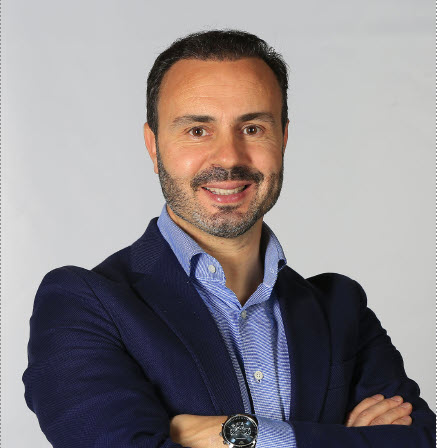
Pedro E. Alcaraz, Ph.D., NSCA CPT*D & CSCS*D
Full Professor in Strength Training
Director of UCAM Spanish Sports University & UCAM Research Center for High Performance Sport Director of Ph.D. Degree in Sports Sciences
Catholic University of Murcia (UCAM)
Spain
Full Professor in sport sciences at UCAM. Pedro is director of UCAM’s PhD program in Sports Sciences, and Spanish Sports University (UCAM), Research Center for High Performance Sport and two official Masters programs in high performance sports (Spanish and English language) (UCAM). Pedro is the President of the Strength and Conditioning Society since 2018. His research is focused around developing strength and conditioning methods for improving performance in athletes. Pedro also provides sport science advice to several top-level professional football clubs. Pedro has published more than 100 scientific articles and has been an invited speaker to many sport science conferences.
“Optimizing neuromuscular training in soccer. Are we properly distributing the training load?”
Speaker F
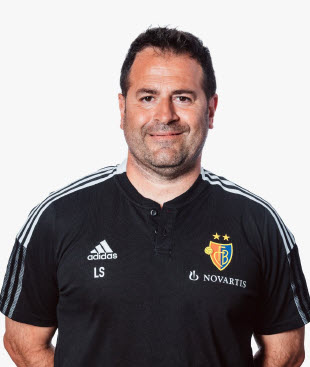
Luis Suarez Arrones, PhD.
Professor at Pablo de Olavide University (UPO)
Spain
Fitness Coach in FC Basel 1893
Switzerland
Professor in sport sciences at UPO. Luis has been fitness coach in different professional soccer teams around the world (Real Betis Balompie Football Club, ACF Fiorentina, Qatar National Football Team, Tianjin Quanjian FC and FC Basel 1893). His research is focused around developing strength and conditioning methods for improving performance and injuries in soccer players. Luis has published more than 70 scientific articles and has been an invited speaker to many sport science conferences.
“Muscle injury prevention in elite football: a holistic approach”


Relative Energy Deficiency in Sport (RED-S); from research to practice.
Pre-conference satellite symposium at the European Congress of Sports Science (ECSS) 2022
The syndrome Relative Energy Deficiency in Sport (RED-S) describes impairment of multiple physiological functions including, but not limited to reproductive function, bone health, immunity, cardiovascular function, protein synthesis and performance (see the figures below). Psychological consequences can either precede, through eating disorders, or result from RED-S. The etiology behind is low energy availability with or without eating disorders. Low energy availability is the most widespread nutritional problem within sport affecting both males and females, elite athletes as well as recreational active people. The aim of the ECSS RED-S symposium is to highlight RED-S within European sports science. The speakers, who are internationally recognized sport science researchers specialized in RED-S, will present the latest updates in the area.
Date: 30.08.2022, Time: 11:00 – 14:00, Lecture room: SALZBURG
11.00
Introduction. Anna Melin & Monica K Torstveit.
11.05
The history, development, and definition of RED-S. Naama Constantini,
Clinical Professor, the Shaare Zedek Medical Center affiliated to the Hebrew University, Jerusalem, Israel.
11.15
RED-S; what are the causes and how prevalent is it? Anna Melin.
11.25
Bone health – the irreversible consequence?
Kirsty Elliot-Sale, Professor,
Manchester Metropolitan University, UK.
11.40
Metabolic challenges associated with RED-S.
Karsten Koehler, Professor, Technical University
of Munich, Germany.
11.55
Special RED-S concerns in female athletes?
Jorunn Sundgot-Borgen, Professor, Norwegian School of Sports Sciences, Oslo, Norway.
12.10
Special RED-S concerns in male athletes?
Martin Mooses, Assistant Professor, University of Tartu, Estonia.
12.25
Performance consequences of RED-S.
José Areta, Assistant Professor, Liverpool John Moores University, UK.
12.40
Early identification and prevention of RED-S.
Practical experiences from the Norwegian Olympic Sports Centre.
Monica K Torstveit.
12.55
Treatment of elite athletes with RED-S. Experiences from the Irish Sport Institute.
Sharon Madigan, PhD, Head of Nutrition, Irish Sport Institute, Ireland.
13.10
Return To Play - Practical experiences from the Norwegian Olympic Sports Centre.
Ina Garthe, PhD, Head of Nutrition, Norwegian Elite Sport Center, Oslo, Norway.
13.25
Questions Anna Melin & Monica K Torstveit.
13.35-14.00
ECSS RED-S Special Interest Group
Meeting Chairs: Anna Melin & Monica K Torstveit.
Description
The syndrome Relative Energy Deficiency in Sport (RED-S) describes impairment of multiple physiological functions including, but not limited to reproductive function, bone health, immunity, cardiovascular function, protein synthesis and performance. The etiology behind is low energy availability with or without eating disorders. Low energy availability is the most widespread nutritional problem within sport affecting both males and females, elite athletes as well as recreational active people. The aim of the ECSS RED-S symposium is to highlight RED-S and the importance of prevention, early identification and treatment within European sports science. The speakers, who are internationally recognized sport science researchers specialized in RED-S, will present the latest updates in the area.
Chairs

Monica K Torstveit, Professor, University of Agder, Norway.
Monica Torstveit is an exercise physiologist with more than 20 years research experience mainly focusing on relative energy deficiency, eating disorders, hormonal function, and bone health among female and male athletes at different performance levels. Monica is also head of sport nutrition at the Norwegian Olympic Sports Center, region South.

Anna Melin, Associate professor, Linnaeus University, Sweden.
Anna Melin is a clinical nutrition physiologist that has been working within Danish and Swedish elite sport since 1995. She is specialized in prevention, early detection and treatment of relative energy deficiency in athletes with or without eating disorders. Her research is mainly focused on the physiological consequences of relative energy deficiency in athletes including reproductive function, metabolic adaptations and the impact on performance.
Speakers:
Naama Constantini, Clinical Professor, the Shaare Zedek Medical Center affiliated to the Hebrew University, Jerusalem, Israel.
Kirsty Elliot-Sale, Professor, Manchester Metropolitan University, UK.
Karsten Koehler, Professor, Technical University of Munich, Germany.
Jorunn Sundgot-Borgen, Professor, Norwegian School of Sports Sciences, Oslo, Norway.
Martin Mooses, Assistant Professor, University of Tartu, Estonia.
José Areta, Assistant Professor, Liverpool John Moores University, UK.
Sharon Madigan, PhD, Head of Nutrition, Irish Sport Institute, Ireland.
Ina Garthe, PhD, Head of Nutrition, Norwegian Elite Sport Center, Oslo, Norway.